


Good bedding is much more than just a detail of your interior. It’s one of the most important elements that directly affects your sleep quality and overall well-being. High-quality fabrics and the right size can turn your rest into pure bliss, help prevent allergic reactions, and give you a deep, peaceful sleep.
How bedding changes your sleep quality
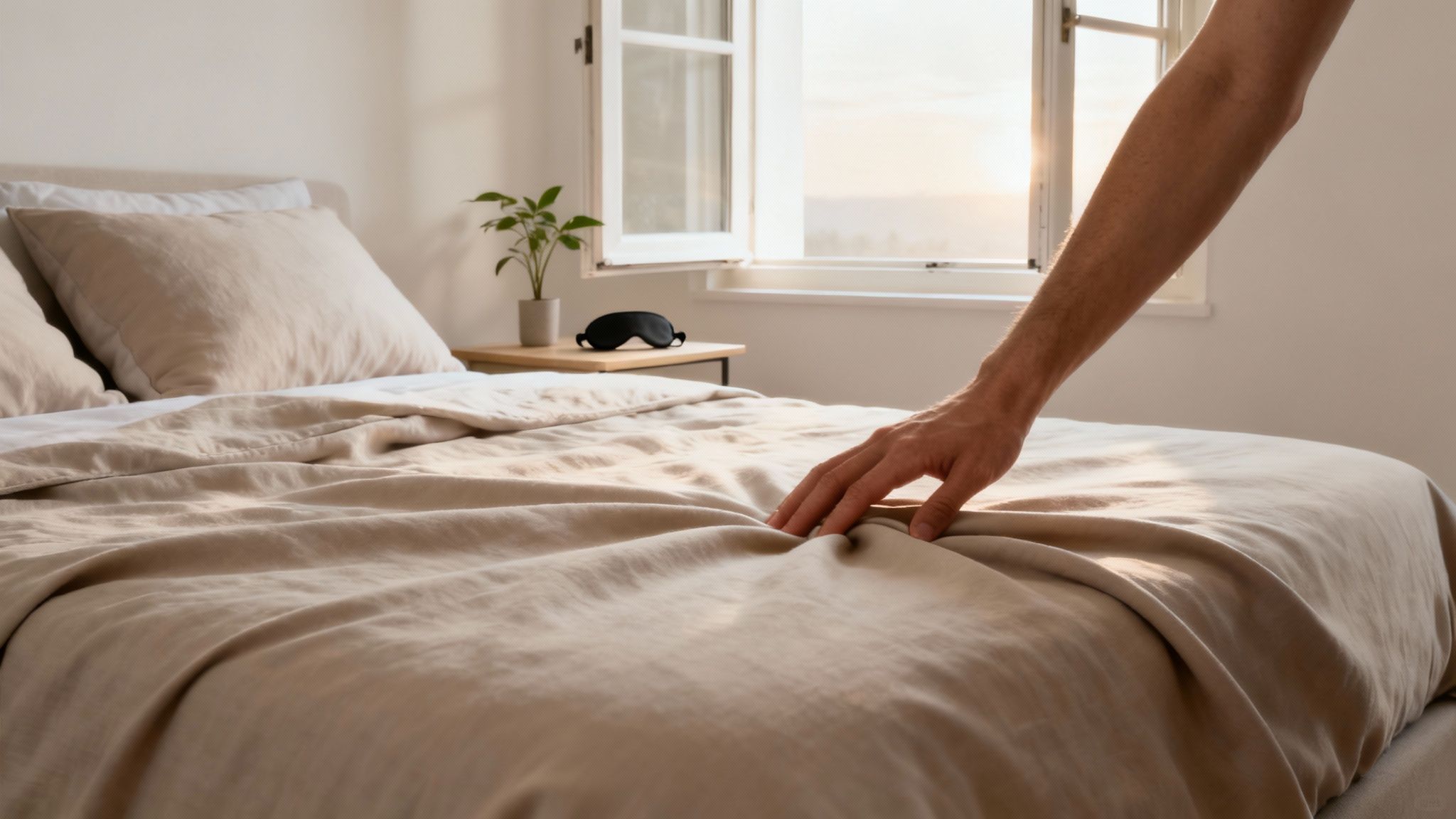
Have you ever wondered why a hotel bed feels so incredibly comfortable? The secret isn’t just in the mattress—a big part of that magical feeling comes from high-quality bedding. And it’s not just about luxury. It’s a conscious choice to invest in your health. After all, we spend about a third of our lives in bed, so the environment where we rest has a huge impact.
Poor bedding can turn into a real nightmare. Synthetic, non-breathable fabrics cause sweating, irritate the skin, and disrupt your body’s natural thermoregulation. Eventually, you start tossing and turning, wake up sweaty, and just feel uncomfortable.
Direct impact on your rest
Quality bedding, especially made from 100% natural cotton, acts like a smart sleep regulator. It adapts to your body temperature: when it’s hot, it cools you down, and when it’s chilly, it keeps you pleasantly warm. This helps you avoid sudden temperature changes, which are often the reason for unexpected awakenings.
The texture of the fabric also plays a huge role. A soft, pleasant-to-the-touch fabric, like sateen, sends calming signals to your brain, helping you relax faster and drift off to sleep. On the other hand, rough or “scratchy” material constantly irritates your nervous system and prevents you from resting.
The sense of calm created by well-chosen bedding isn’t just emotional. Scientific studies show that the colors and textures of your sleep environment directly affect stress hormone levels and the stability of your sleep cycle.
The benefits of bedding for health and well-being
Investing in good bedding pays off not only with better sleep but also with tangible health benefits. Here are some of the main advantages:
- Lower risk of allergies. Natural, breathable fabrics like cotton prevent moisture buildup. This creates an unfavorable environment for dust mites and mold.
- Healthier skin. Cotton allows your skin to breathe freely, absorbs excess moisture, and doesn’t irritate even the most sensitive skin. This helps prevent rashes or irritation.
- Better emotional state. Good sleep is directly linked to a better mood, higher productivity, and lower stress levels during the day.
Once you understand how bedding affects your body and mind, making a decision becomes much easier. It’s not just a piece of fabric—it’s an important part of your well-being.
Comparison of the most popular bedding fabrics
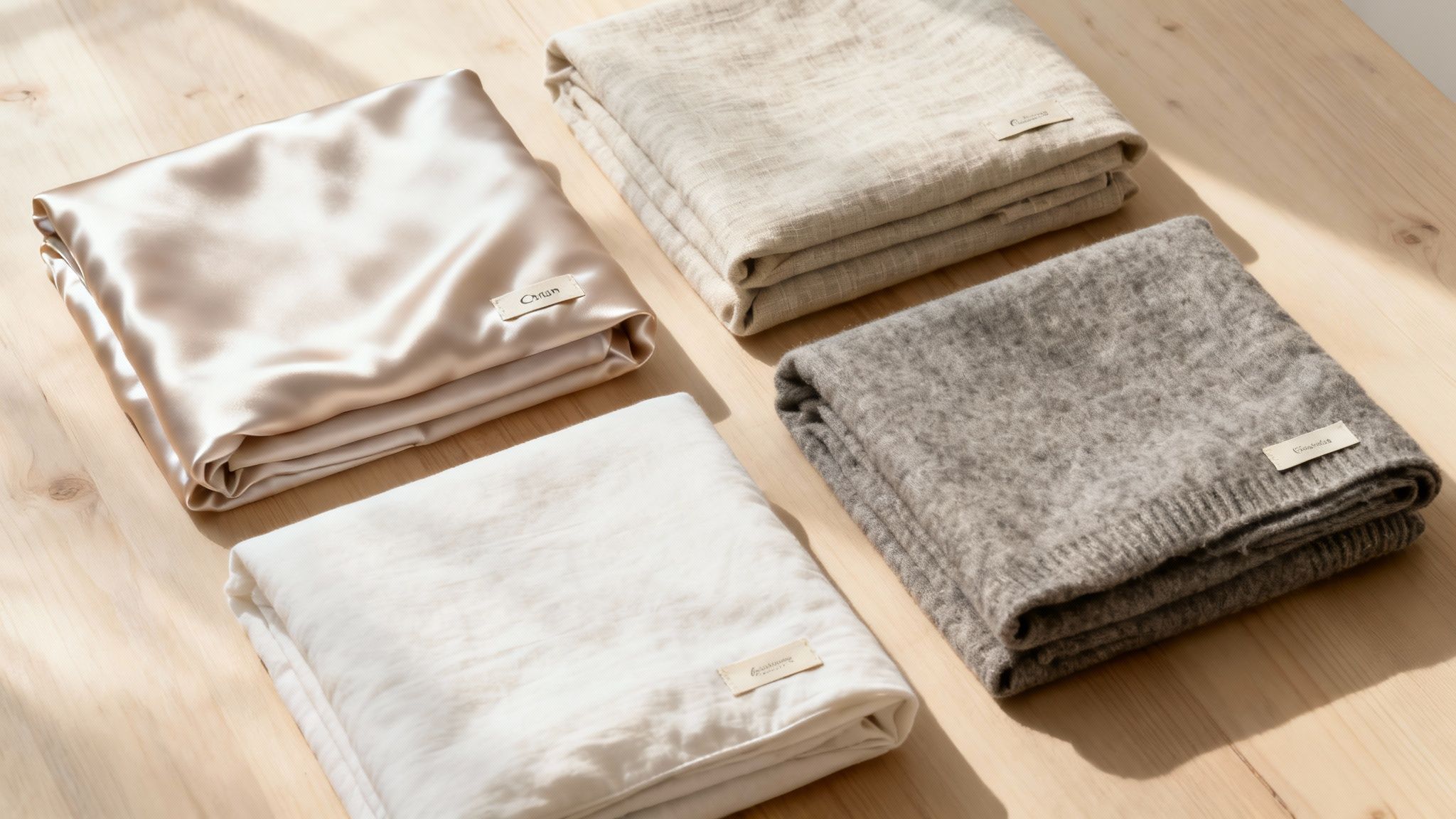
Choosing a bedding fabric is almost like picking a good friend for your sleep. Each material has its own character, its own advantages, and sometimes—quirks. To find the perfect option, you first need to understand how the most popular fabrics differ and which one best meets your expectations.
So, let’s dive into the world of fabrics and compare the main players: versatile cotton (with its varieties—sateen and cotton fabric) and refreshing linen. We’ll evaluate each based on key criteria—from how it feels on the skin to care requirements.
Cotton—the queen of your bedroom
Cotton is the undisputed leader in the bedding market, and for good reason. It’s a natural fiber we all love for its versatility, softness, and breathability. It absorbs moisture perfectly, so sleeping under cotton bedding is comfortable on both cool nights and hot summer days.
It’s no secret that the healthiest sleep is in bedding made from natural fibers. Cotton is especially valued in Lithuania for its ability to adapt to our changing climate and its exceptional coziness. Most importantly, it’s a 100% natural fabric that doesn’t irritate the skin, making it an ideal choice for people with sensitive skin.
However, “cotton” is a broad term. Two very different but equally popular fabrics are made from it: sateen and cotton fabric.
Sateen: a touch of luxury
When you hear the word “sateen,” many imagine a slippery, shiny, and often synthetic fabric. But that’s a myth. True cotton sateen isn’t a material, but a special weaving technique that gives the fabric incredible softness, a subtle sheen, and a luxurious feel.
Imagine the gentle, pleasantly cool touch of silk—that’s exactly the feeling quality sateen provides. Thanks to its specific weave (usually one thread on top and four underneath), its surface is extremely smooth and wrinkles less than other cotton fabrics.
- Advantages: Extremely soft, pleasantly cools, looks luxurious, and wrinkles less.
- Who is it for? Those who love luxury, softness, and for whom summer nights are too hot.
Cotton fabric: reliability and durability
Cotton fabric is also cotton, but its weaving method (a simple “one over one” weave) gives it completely different properties. Cotton fabric is visually sturdier, looser, thicker, and at first may seem a bit rougher than sateen. It’s reminiscent of that classic, cozy grandma’s bedding that gets softer and more pleasant with every wash.
This fabric is incredibly durable and withstands countless washes without losing its shape. Thanks to its excellent breathability and strength, cotton fabric is a very practical choice for everyday use.
- Advantages: Long-lasting, breathable, easy to care for, and gets softer over time.
- Who is it for? Those who value practicality, naturalness, and durability.
Linen: natural refreshment
Linen is a real lifesaver on hot summer nights. This natural fiber is exceptionally good at absorbing moisture and dries quickly, so even if you sweat more, you’ll still feel fresh. Linen bedding is a bit rougher, but that gives it a unique charm and even a gentle massaging effect.
Linen is one of the most sustainable and strongest natural fibers. Although it may seem stiff at first, over time and with each wash, it becomes softer and more pleasant to the body.
In addition, linen is naturally antibacterial and hypoallergenic, making it perfect for people with sensitive skin or allergies. While it wrinkles much more than cotton, this natural wrinkling is what gives linen its relaxed elegance.
If you want to dive even deeper into the world of fabrics, read our article discussing the most popular types of fabrics and their features.
Comparison of bedding fabric properties
To make your decision easier, we’ve prepared a short table comparing the main properties of cotton (sateen, cotton fabric) and linen. This will help you quickly assess what would best suit your bedroom.
| Fabric | Softness | Breathability | Best season | Care | Price |
|---|---|---|---|---|---|
| Sateen | Very soft | Excellent | All seasons, especially summer | Requires gentle care | Medium / High |
| Cotton fabric | Medium, softens | Excellent | All seasons | Very simple | Affordable / Medium |
| Linen | Rough, softens | Exceptional | Summer | Simple, but wrinkles | Medium / High |
We hope this comparison will help you better assess which bedding fabric best matches your sleep habits, comfort expectations, and budget.
How to choose bedding according to your needs
The search for perfect bedding doesn’t start on a store shelf, but in your own bedroom. Before thinking about colors or patterns, you first need to listen to your body and sleep habits. What’s a real comfort discovery for one person can be the reason for a sleepless night for another.
This section is like a personal consultation to help you match your lifestyle with the most suitable bedding fabric. Let’s see how personal needs, such as body temperature or skin sensitivity, determine your final choice.
If your skin is sensitive or prone to allergies
Sensitive skin needs extra softness and, most importantly, naturalness. Synthetic fabrics often “don’t get along” with the skin—they don’t let it breathe, cause sweating, and can trigger irritation or even allergic reactions. If this sounds like you, your priority should be 100% natural fiber.
- Cotton. This is one of the safest and most time-tested choices. Cotton is naturally hypoallergenic, breathes well, and absorbs moisture. This keeps your skin dry and calm all night.
- Linen. This fabric is also valued for its anti-allergic properties and exceptional breathability. Linen quickly evaporates moisture, creating an unfavorable environment for bacteria or dust mites. However, if your skin is extremely sensitive, linen’s touch may be too rough and irritating.
Avoid fabrics treated with harsh chemical dyes or formaldehyde, which are sometimes used to reduce wrinkling. It’s better to trust manufacturers who use safe, certified dyes.
What if you’re too hot or too cold at night?
Do you often wake up sweaty and throw off your blanket? Or, on the contrary, are you always looking for an extra throw because you’re shivering from the cold? Your body’s tendency to heat up or get cold is one of the most important criteria when choosing bedding.
Properly chosen bedding acts as a personal thermostat. It helps maintain a stable body temperature—which is essential for deep and restful sleep.
If you tend to overheat and sweat:
You need a fabric that efficiently absorbs moisture and allows your body to cool naturally. Linen and cotton are best for this. These fabrics are like open windows—they breathe well, so moisture evaporates quickly and you feel fresh. Cotton sateen is a great choice because its smooth surface pleasantly cools the skin.
If you often feel cold:
You need a fabric that helps retain body heat but still lets your skin breathe. Denser cotton sateen or sturdier cotton fabric creates a cozy microclimate and keeps your body from getting cold. In winter, a down duvet covered with a cotton cover can enhance the feeling of warmth.
How to balance comfort and budget
While quality bedding is an investment in good rest, that doesn’t mean you have to empty your wallet. The key is to find a golden middle ground between the comfort you want and a reasonable price.
| Need | Recommended fabric | Budget |
|---|---|---|
| Luxury and softness | Cotton sateen | Medium / High |
| Practicality and durability | Cotton fabric | Affordable / Medium |
| Natural freshness and coolness | Linen | Medium / High |
| Sensitive skin, allergies | Cotton fabric, sateen | Depends on fabric |
Remember, long-lasting and quality bedding always pays off in the long run. For example, by investing in a good cotton fabric set, you can be sure it will last for years and get softer with every wash. It’s a smart choice for those who value durability.
Once you’ve answered questions about your skin type, body temperature, and budget, you’ll be able to make a decision that guarantees not only a beautiful bedroom look but, most importantly, deep and restorative sleep every night.
Bedding sizes: how to get it right
Is there anything more annoying than realizing your brand-new duvet cover is hopelessly too big, or your fitted sheet just won’t stretch over the mattress? You’ll probably agree—this is one of the most common mistakes when buying bedding.
The good news is that this problem is easy to avoid. All you need is a few minutes and a measuring tape. Here you’ll find a short but very important guide on how to measure your sleep essentials and confidently choose perfectly fitting bedding. Once you know the exact measurements, you can shop with peace of mind both in-store and online.
How to measure your bedding correctly?
Before you start searching for a new set, be sure to grab a measuring tape. Accuracy is everything here. Don’t just “eyeball” it—carefully write down every centimeter.
The three main things you need to measure:
- Duvet. Simply lay your old duvet flat on the bed or floor and measure its length and width. Write down these numbers—they’ll be your guide when looking for a new cover.
- Pillows. Do the same with your pillows—measure their length and width. While most pillows are standard sizes, there are always exceptions, so it’s best to check.
- Mattress. This requires a bit more attention. You need to measure three dimensions: width, length, and most importantly, height. Mattress height is crucial when choosing a fitted sheet.
Don’t forget mattress height! Most standard fitted sheets are designed for mattresses with a height of 20–25 cm. If your mattress is higher, look for special deep-pocket sheets or consider a custom order.
Standard bedding sizes and their equivalents
While individual measurements are the most reliable method, it’s useful to know the most common standards in Lithuania. The table below lists the most popular bedding set and component (duvet and pillow cover) sizes to help you navigate product descriptions more easily.
| Set type | Duvet cover size (cm) | Pillow cover size (cm) |
|---|---|---|
| Single set | 140x200 | 50x70 (1 pc.) |
| Double set | 200x200 or 200x220 | 50x70 (2 pcs.) |
Although these standards are the most common, you’ll definitely find other options on the market. That’s why personal measurements are so important—they’ll save you from unpleasant surprises when you unpack your new purchase.
With all the measurements, you’ll know which duvet and pillow covers and which sheet to choose. When shopping for bedding at Rustilė, it’s important to know that all our fabrics are 100% natural, so they tend to shrink. Normal shrinkage is up to 3-5% from the original size. Therefore, we recommend buying a duvet cover about 5% larger. For example, for a 140x200 cm duvet, choose a 145x210 cm duvet cover. For a 200x220 cm duvet, after the first wash, a 210x230 cm duvet cover will fit best.
You can choose pillow covers the same size as your pillow, as the pillow will fill out even a slightly shrunken cover due to its shape. However, if your pillow is very thick or firm, you can also “add” a few centimeters to each side.
When buying a fitted sheet, choose one with the same length and width as your mattress, but at least 10 cm higher than the mattress height.
If you want to learn more about how to avoid mistakes, read our guide on how to choose the right bedding cover size. You’ll find even more practical tips there.
The right size ensures that your bedding not only looks great but is also comfortable. The duvet won’t bunch up inside the cover, and the sheet will stay firmly on the mattress all night. That’s what lets you enjoy a peaceful and comfortable rest.
How to keep your bedding long-lasting: care secrets and tips

When you buy a truly high-quality bedding set, you want to enjoy it as long as possible, right? But sometimes even the most luxurious fabric quickly loses its charm simply because of improper care. The good news is that a few simple habits can work wonders and significantly extend the life of your bedding.
By the way, proper care starts even before the first night. It’s always worth washing new bedding—this not only removes fibers or dust accumulated during production, but also makes the fabric softer, more pleasant, and cozier.
Golden washing rules
The first and most important step—always check the care label. The manufacturer has listed everything you need to know about that specific fabric. If you ignore these recommendations, you risk irreparably damaging your beloved set.
One of the most common mistakes is washing in water that’s too hot. While it may seem that high temperatures kill bacteria better, in reality, they weaken the fabric fibers, fade colors, and can even cause shrinkage.
- For cotton sateen and cotton fabric, 40°C is usually more than enough. This is the golden mean that effectively cleans but is gentle on the fabric.
- Light and white bedding can be washed hotter, up to 60°C, but keep in mind that this may cause more shrinkage.
- Colored fabrics should always be washed separately from whites to avoid unpleasant color “surprises.”
Choose gentle, liquid detergents, preferably without bleach or other harsh chemicals, especially when washing patterned bedding. Strong agents can damage the fabric structure and “eat away” the patterns.
Important: before putting covers in the washing machine, turn them inside out and zip up the zippers. This protects the fabric surface from friction, and the zippers won’t damage other laundry.
Drying and ironing—just as important
Properly drying your bedding is just as important as washing it. The best and most fabric-friendly way is to let it air dry outdoors.
If you do use a dryer, always choose a low-temperature setting. Heat weakens cotton fibers and can cause more shrinkage. To reduce wrinkling, take the bedding out of the dryer while it’s still slightly damp.
An iron not only gives bedding a neat appearance but also further softens the fabric. It’s best to iron cotton while it’s still a bit damp, using a medium heat setting.
If you want to maintain the highest quality and durability, it’s worth learning how real Lithuanian bedding is made and cared for, following time-tested standards.
How often should you change your bedding?
While it depends on personal habits, the general recommendation is simple: change your bedding once every 1–2 weeks. This ensures your sleep environment stays hygienic, free from sweat, skin cells, and dust mites. By following these tips, you’ll enjoy bedding that stays soft, vibrant, and comfortable for years.
How to successfully buy bedding online
Shopping online has long been part of our daily lives. It’s simply convenient, fast, and lets you choose from a much wider range than you could ever see in a day of walking through stores. But when it comes to something as personal as bedding, many people naturally wonder—how do you make the right choice without even touching the product?
How to recognize quality through a screen
While you can’t feel the fabric through a screen, you can definitely assess its quality by carefully reading the product description and looking at photos. Professional sellers always try to provide as much information as possible to help you get the clearest picture.
Read the product description carefully:
- Composition. Look for specific wording, such as “100% cotton sateen” or “100% cotton fabric.” If you see vague descriptions like “cotton blend,” “synthetic cotton sateen,” or “microfiber,” and you’re looking for a natural fabric, be cautious.
- Country of manufacture and certificates. If it says the bedding is made in Lithuania or the European Union, that’s often a sign of good quality. And the OEKO-TEX® STANDARD 100 certificate guarantees the product contains no harmful substances.
- Guarantees provided. Pay attention to what guarantees the bedding seller offers. Rustilė even offers a 30-night bedding trial guarantee and a 365-night warranty for seams and zippers. This shows confidence in the quality of their products.
Signs of a reliable seller
Choosing a trustworthy seller is just as important as picking a quality product. Here are a few things to help you distinguish professionals from amateurs:
- Reviews. Check customer reviews on the website, social media, or independent platforms. Real photos and detailed comments are a goldmine of valuable information.
- Customer service. Before buying, you can do a quick test—contact the seller with a question by email or phone. A quick and professional response shows the company values its customers.
- Clear return policy. Reliable stores always clearly state their return conditions. For example, a 30-night trial guarantee is a great sign. It shows the seller is fully confident in their product quality.
Trust is also built by clearly stated company details and contact information. Transparency is one of the most important elements of reliable e-commerce.
Secure payment and delivery
Online shopping in Lithuania became incredibly popular very quickly. The e-commerce boom, which started back in 2007, has greatly changed the home textiles market. Imagine, in 2013 alone, as many goods were sold online in 13 days as in all of 2008! This best shows how quickly Lithuanians embraced digital shopping. You can read more about the development of e-commerce in Lithuania here.
Today, paying online is completely safe if you follow a few simple rules. Choose stores that offer secure payment methods:
- Payment through Lithuanian banking systems.
- Card payment via secure partners (e.g., Stripe).
Also pay attention to delivery terms. Reliable sellers often offer free delivery from a certain amount and clearly state how long it will take for your order to arrive.
When buying bedding online, just pay a little more attention to the details. Detailed information, customer reviews, and clear guarantees will help you make the right choice and enjoy a quality purchase without any stress.
Frequently asked questions about bedding
When choosing bedding, especially online, questions always arise. Will this fabric really suit me? How often will I need to change it? Or will sateen be too slippery? We’ve gathered your most popular questions and prepared short, clear answers to help clear up any doubts.
Which fabric is the best?
There’s no single “best” fabric—it all depends on what you’re looking for and what you value most.
If you dream of luxurious softness, a subtle sheen, and a pleasant coolness against your skin, your favorite will undoubtedly be cotton sateen. For those who value practicality, natural coziness, and durability, nothing beats reliable cotton fabric.
How often should bedding be changed?
Hygiene specialists recommend changing and washing bedding about once every one or two weeks. While we sleep, we sweat, our bodies release natural oils, and dead skin cells shed—all of this accumulates in the fabric.
Regularly changed bedding prevents dust mites and bacteria from multiplying, keeping your sleep environment clean and healthy. This is especially important if you have sensitive skin or are prone to allergies.
Is cotton sateen slippery?
This is probably the most popular myth! Real, 100% cotton sateen is definitely not slippery. Thanks to its special weave, its surface is incredibly smooth and soft, but it has nothing in common with the slipperiness typical of synthetic polyester.
Quality sateen gently envelops your body, gives a sense of luxury, but definitely won’t make you “slide” around the bed.
How to make bedding less wrinkly?
Natural fabrics will always wrinkle a bit—it’s in their nature. But you can greatly reduce this. Here are a few proven ways:
- Wash loosely. Don’t overload the washing machine; let the bedding move freely.
- Take out immediately. As soon as the wash or dry cycle ends, take out the laundry right away.
- Dry carefully. If you use a dryer, choose a lower temperature and gentle cycle.
- Iron while slightly damp. This is the most effective way to smooth even the most stubborn creases.
Remember: a bit of wrinkling is a sign of quality natural fabric, like cotton fabric or linen. It gives the fabric authenticity and shows you’re sleeping in breathable, high-quality fiber bedding.
How to choose the right sheet size?
For a fitted sheet to fit perfectly, you need to know three mattress measurements: width, length, and most importantly, height. Mattress height is often forgotten, but it’s crucial.
Most standard fitted sheets fit mattresses up to 25 cm high. If your mattress is higher, look for sheets designed for taller mattresses or consider a custom order. This way, you’ll be sure the sheet will firmly cover the corners and won’t slip off.
Discover the perfect bedding for your bedroom at the Rustilė online store. We offer a wide range of 100% cotton sateen and cotton fabric products, as well as custom sewing solutions to make your rest as comfortable as possible. Visit Rustile.lt and feel the difference in quality.
Leave a comment