


When we start talking about a good night's sleep, sooner or later we always come back to the classics – cotton bedding sets. There's a reason they're considered the gold standard. They're not just a beautiful bedroom detail, but also a smart investment in your rest that pays off every single night.
Why is cotton the true queen of your bedroom?
Let’s put it simply – why do we keep coming back to cotton when searching for the perfect bedding? Imagine that feeling when you slip on a light cotton shirt on a hot summer day. Your skin instantly feels refreshed, right? That’s exactly how it feels under a 100% cotton duvet cover – free and comfortable.
This natural fiber acts like a smart thermostat. It lets your skin “breathe,” so you won’t overheat or sweat as much at night. Cotton absorbs moisture perfectly, keeping your body dry and your sleep deep.
Three main strengths of cotton
It’s these qualities that make cotton indispensable when it comes to quality rest. By investing in cotton bedding, you’re creating a healthier environment for yourself and your loved ones.
- Comfort without compromise: Cotton feels pleasant to the touch, doesn’t irritate the skin, and creates that unique sense of coziness. It keeps you warm in winter and pleasantly cool in summer.
- Easy care: Quality cotton is surprisingly durable. It’s easy to wash, dries quickly, and most importantly, retains its appearance and color for a long time.
- Natural and safe: This is a plant-based fiber, making it ideal even for people with the most sensitive skin, children, or those suffering from allergies.
A good bedding set is not just a detail of your interior. It’s a key investment in your well-being. After all, how well you sleep determines your entire day ahead.
Of course, the internet is full of offers from big retailers selling everything from pots to bedding. There you’ll find product descriptions and general care tips. But if you want bedding that will last and bring you joy, you need to understand a bit more – the differences between fabrics and how to recognize quality. You can read more about this here: learn more about bedding sets for a peaceful sleep.
This guide will help you avoid confusion and make a decision you’ll be happy with for a long time. We’ll cover everything – from choosing the right fabric to care tips. You’ll understand why cotton bedding sets are the choice that guarantees restful and rejuvenating sleep.
Sateen or cotton – which fabric is right for you?
Choosing between cotton sateen and cotton fabric is like deciding what kind of atmosphere you want to create in your bedroom. These are two completely different worlds of sensation: one exudes luxury and softness, the other – natural freshness and simplicity. The most interesting part is that both fabrics are made from the same 100% cotton, but it’s the weaving technique that determines how you’ll feel wrapped up in them.
Imagine a cool summer morning at a countryside cottage, with fresh air streaming through the window. That’s the feeling cotton fabric gives. It’s a bit stiffer, strong, and incredibly breathable, reminiscent of high-quality, freshly ironed men’s shirts.
Now picture yourself in a luxury hotel. The soft, silky smoothness of sateen glides over your skin and envelops you in royal comfort.
The magic of weaving techniques
The entire difference between these two fabrics comes not from the cotton itself, but from the way the threads are woven.
- Cotton fabric (Eng. Canvas) is woven in a simple weave: one thread on top, one underneath. This creates a very strong, dense, but matte structure that is exceptionally breathable and softens with every wash.
- Sateen (Eng. Sateen) is woven more intricately: four threads go on top and only one underneath. This puts more threads on the surface, giving the fabric its characteristic subtle sheen, softness, and smoothness. Thanks to the finer threads used, sateen is lighter than cotton fabric, but still very durable.
If you want to better understand how to distinguish real cotton sateen from synthetic substitutes, check out our detailed guide on the features of sateen fabric.
Comparison of cotton fabrics: sateen vs. cotton
This table clearly compares the main features of sateen and cotton fabrics to help you decide more easily.
| Feature | Cotton sateen | Cotton fabric |
|---|---|---|
| Feel | Soft, smooth, silky | Firm, thicker, fresh |
| Appearance | Subtly shiny, luxurious | Matte, classic, natural |
| Wrinkling | Wrinkles less | Wrinkles more, especially after washing |
| Breathability | Excellent | Excellent |
| Durability | Thinner but tightly woven fabric | Extremely strong and long-lasting |
| Best for | Sensitive skin, luxury lovers, warm seasons | Heavy sweaters, winter nights, those who value practicality |
Both fabrics are excellent choices, but as you can see, their properties suit different needs. Now let’s take a closer look at each one.
Cotton fabric – the champion of durability
Cotton fabric is a real find for those who value practicality and longevity. Its strong weave and thicker threads ensure that these cotton bedding sets will withstand many washes and become even softer over time.
Thanks to its practicality, strength, and thickness, cotton fabric is an excellent choice for bedding. It’s durable and long-lasting, making it perfect for everyday use.
Sateen – the synonym of luxury and softness
Sateen is the embodiment of luxury. Its surface is incredibly smooth and soft, making it ideal for people with sensitive or irritation-prone skin. Thanks to its gentle finish, it pills less and is softer on hair, so your hair looks neater in the morning.
Sateen is slightly lighter than cotton fabric and is also highly breathable. A big advantage – this fabric wrinkles less, so your bed will always look neat and tidy.
Practical scenarios to help you decide
To make your decision even easier, here are a few situations:
- If you often feel hot at night: Your best friend is sateen. It lets your skin breathe and keeps you pleasantly cool.
- If you have sensitive skin or brittle hair: Choose sateen. Its smooth surface reduces friction and won’t irritate your skin.
- If you value durability and wash your bedding often: Cotton fabric is stronger and softens with every wash, so it will last for years.
- If you want to create a luxurious bedroom look: Sateen and its subtle sheen will add elegance to your interior.
Ultimately, both sateen and cotton fabric are great choices if made from 100% quality cotton. The most important thing is to consider your personal needs and the sensations you want to experience in your bed.
How to choose the right bedding size
You’ll probably agree – even the most luxurious cotton bedding can instantly lose all its charm if the size is wrong. Just think: a fitted sheet that keeps slipping off the mattress corner or a duvet cover that’s too big, causing the duvet to bunch up inside. These seemingly minor daily annoyances steal your peaceful sleep and are simply irritating.
The good news is that avoiding this mistake is much easier than it seems. The main rule – before buying, know the three main measurements of your bed: mattress, duvet, and pillows. The right sizes will ensure not only flawless aesthetics but also maximum comfort for your rest.
It all starts with a measuring tape
Yes, it’s that simple. Before you start searching for a new set, take a few minutes and use a measuring tape to measure three things:
- Mattress width and length. This is the most important measurement, especially when choosing a fitted sheet. The most popular double bed standards in Lithuania are 160x200 cm and 180x200 cm.
- Mattress height (thickness). This number is often forgotten, but it’s critically important if you’re choosing a fitted sheet with elastic. The standard mattress height is about 20–25 cm, but modern mattresses or those with toppers can be much higher.
- Duvet and pillow sizes. Don’t rely solely on the label “double.” It’s best to check the manufacturer’s label for the exact measurements. The standard double duvet is usually 200x220 cm, and the single is 140x200 cm. Pillows also come in various sizes, but the most popular are 50x70 cm or 70x70 cm.
How to apply the numbers in practice?
Once you have the exact measurements, choosing the right bedding is a pleasure. Here are a few examples to make it clearer.
Let’s say your mattress is 160x200 cm and its height is 25 cm. You’ll need:
- Fitted sheets: Look for a sheet labeled 160x200 cm. But be sure to check its height. Quality fitted sheets are usually designed for mattresses 25–30 cm high. If your mattress is higher, look for special, taller sheets. When ordering a custom-fitted sheet, we recommend choosing a height 10 cm greater than your mattress. This way, the sheet will tuck under the mattress, and its weight will keep it in place.
- Flat sheets (without elastic): The simple rule here – choose a sheet at least 40–50 cm wider and longer than your mattress. For example, for a 160x200 cm mattress, a 220x240 cm flat sheet would be ideal. This makes it easy and neat to tuck the edges under the mattress.
Size standards and other nuances
It’s important to know: natural fabrics, especially 100% cotton, tend to shrink a little after the first wash. This is completely normal. If in doubt, it’s always safer to choose a slightly larger size rather than one that fits “on the edge.”
Although there are certain standards, sizes may vary slightly between manufacturers. After the first wash, the duvet cover should fit the duvet perfectly. If it’s too small, the duvet will bunch up and lose its fluffiness. If it’s too big, it will just “float” inside and bunch up in one corner. So, for a 200x220 cm duvet, choose a 210x230 cm duvet cover – this way, after the fabric shrinks in the wash, the cover will fit your duvet perfectly.
With pillows, it’s a slightly different story. A slightly shrunken pillowcase won’t be a problem if the pillow is soft and adapts to the cover’s shape. However, if you use very firm or shaped pillows, also choose pillowcases a couple of centimeters larger.
If you have non-standard sizes or simply want everything to fit perfectly, custom sewing is a great solution. This is especially relevant for those with older or custom-made beds.
In the end, the right size is just as important as fabric quality. By spending a few minutes measuring, you’ll ensure your new cotton bedding sets provide maximum comfort and look flawless. If you want to dive even deeper, check out our detailed guide on how to choose the right bedding cover size.
The benefits of cotton bedding for allergy sufferers
When your skin is sensitive or you suffer from allergies, choosing the right bedding goes from a luxury to a necessity. And here, 100% natural cotton becomes a real lifesaver – it’s much more than just a beautiful fabric. It’s like an oasis of calm in your bed.
Sensitive skin needs gentleness, and that’s exactly what cotton provides. Unlike synthetics, which can generate static, irritate the skin, and cause sweating, cotton lets your body breathe freely and maintains a pleasant microclimate all night long.

How cotton fights allergens
One of the most common causes of allergies in the bedroom is dust mites. They love the warm, damp environment created when we sweat at night. This is where the full power of natural cotton fiber comes into play.
Cotton acts as an excellent moisture regulator. It absorbs sweat from your body and quickly evaporates it, so your bedding stays much drier. This creates an unfavorable environment for dust mites and naturally reduces the amount of allergens in your bed.
For allergy sufferers, bedding is not just about comfort – it’s the first line of defense. By choosing hypoallergenic cotton, you create a safer and healthier sleep environment.
Pay attention to certifications and colors
When looking for the perfect bedding for sensitive skin, the label “100% cotton” alone may not be enough. It’s especially important to consider how the fabric was processed during production.
- Oeko-Tex Standard 100 certification: This is one of the world’s best-known textile standards. If your bedding has this label, you can be sure the fabric has been tested for harmful substances. It’s a guarantee that the fabric is safe and won’t irritate your skin.
- The importance of color: While colorful bedding looks attractive, various dyes are used to achieve bright colors. For people with very sensitive skin, even safe dyes can sometimes cause unwanted reactions. That’s why the safest choice is often white or natural-colored cotton bedding sets, which use the least chemicals in production.
Practical care tips for allergy sufferers
Choosing the right bedding is only half the job. Proper care is just as important if you want to minimize allergens.
- Change your bedding regularly. Allergy sufferers should change their bedding more often – at least once a week. This removes accumulated dead skin cells, which are the main food source for mites.
- Use hypoallergenic detergents. Choose fragrance-free products designed for sensitive skin to avoid additional irritation.
By choosing quality, certified, and properly cared-for cotton bedding, you can significantly improve your sleep quality and reduce allergy symptoms, turning your bedroom into a true sanctuary of peace and health.
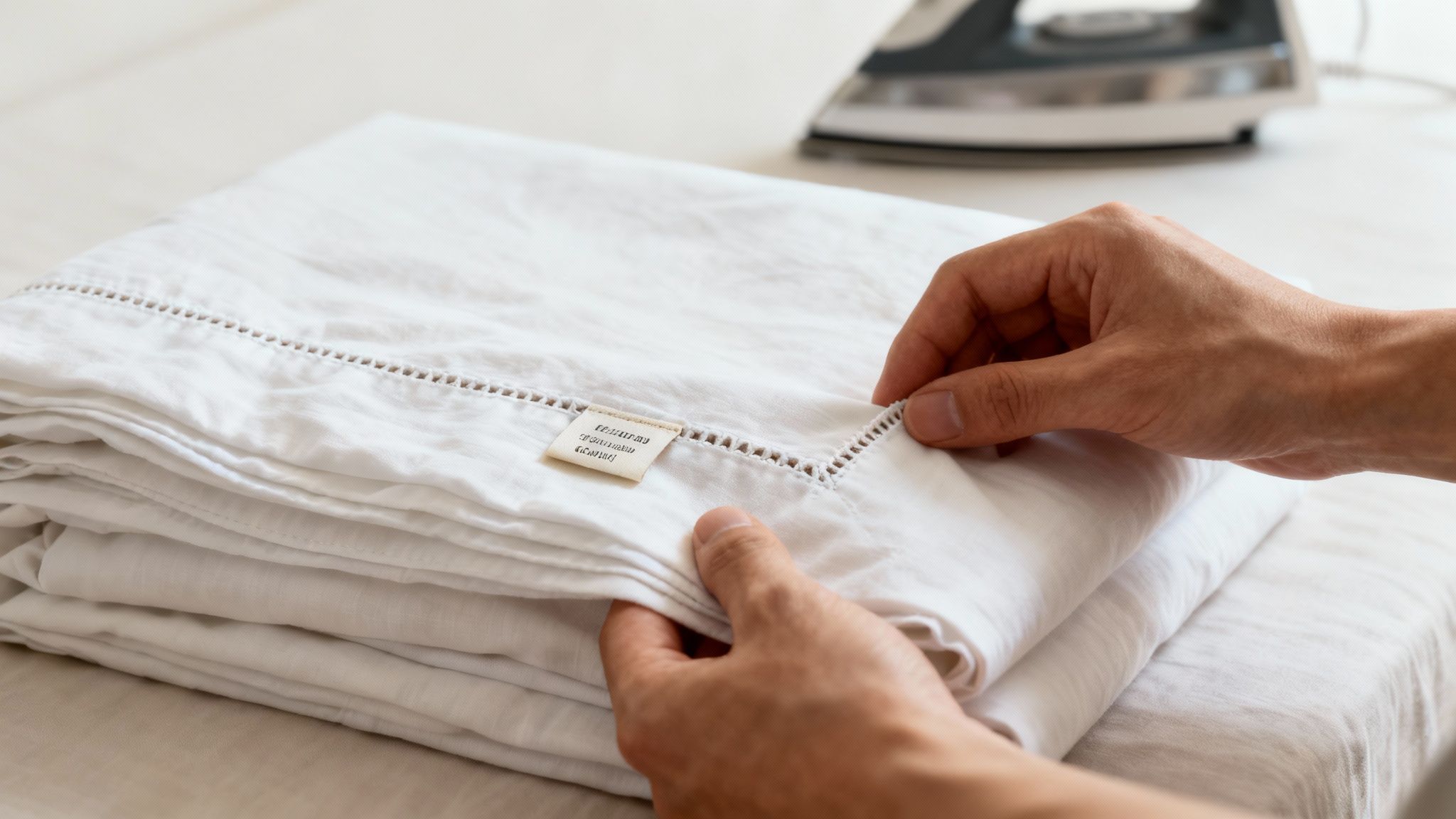
The art of care: how to preserve your bedding’s longevity
Once you’ve bought a great set, the most important thing is to care for it properly. The right care not only preserves the fabric’s color and softness but can even double its lifespan. Here are a few tried-and-true tips.
1. Preparing for washing
Before putting your bedding in the washing machine, always turn it inside out. This simple step protects the colors from fading and the fabric surface from friction. Always zip up all zippers to prevent them from damaging the fabric during washing.
2. Washing
- Temperature: Although cotton can withstand heat, 40 °C is perfectly sufficient for everyday washing. This saves the fabric, the colors, and electricity.
- Detergents: Choose gentle detergents designed for colored fabrics. Most importantly – avoid bleach. It breaks down cotton fibers and can leave unsightly yellow stains over time.
- Drum loading: Don’t overload the washing machine. Leave enough space for the laundry to move freely – this way it will wash better and wrinkle less.
3. Drying and ironing
The ideal and most fabric-friendly way is to dry your bedding outdoors, but not in direct sunlight. The sun can mercilessly fade colors. If you use a dryer, choose a low-temperature program and remove the bedding while it’s still slightly damp – you’ll see how easy it is to iron.
And one more myth we want to dispel: cotton doesn’t need to be ironed with the hottest iron. Most cotton fabrics are perfectly fine with a medium temperature, especially if you iron them while still slightly damp. This protects the fibers from damage.
By recognizing quality and properly caring for your bedding, you’ll ensure your cotton bedding sets look flawless and last for many years.
Frequently asked questions
Even after deciding on fabric and size, it’s natural to have additional questions. Usually, they’re very practical – about care, durability, or quality guarantees. Here we’ve gathered the most common questions from our customers and prepared clear answers to dispel any doubts.
Our goal is to have all the most important information in one place so you can enjoy your purchase with peace of mind.
Does cotton bedding shrink after washing?
Yes, and that’s completely normal. 100% natural cotton always shrinks a little after the first wash – it’s a natural fiber reaction to water and heat. Usually, the fabric shrinks by 3% to 5%.
Important: Never wash cotton at a higher temperature than recommended. Water that’s too hot will make the fabric shrink more than intended and can damage the fiber structure.
How often should you change your bedding?
Hygiene specialists agree – it’s best to change your bedding once a week. At night, our bodies release sweat, oils, and shed millions of dead skin cells that remain in the bedding.
All this creates a perfect environment for dust mites and bacteria to multiply. Regularly changing your bedding is simply a must:
- For allergy sufferers: Helps reduce the amount of allergens in your sleep environment.
- For those with sensitive skin: Clean bedding protects against acne and other skin irritations.
- For heavy sweaters: Ensures freshness and hygiene essential for quality rest.
This simple habit is one of the best investments in healthy and restful sleep.
What does the Oeko-Tex standard mean?
If you see the Oeko-Tex Standard 100 label on the tag, you can rest easy. It’s one of the world’s best-known textile safety certifications.
This label means the fabric has been thoroughly tested and contains no harmful chemicals. It’s a guarantee that the bedding is completely safe for your skin and health.
Here’s why the Oeko-Tex certificate is especially important when choosing bedding:
- For children and babies, whose skin is extremely sensitive.
- For people suffering from allergies or skin conditions.
- For anyone who values naturalness and wants to avoid any contact with potentially harmful substances.
How to reduce bedding wrinkling?
It’s true, natural cotton – especially cotton fabric – tends to wrinkle. But there are a few tricks to make this process much easier.
- Don’t overload the washing machine. Leave space for the bedding to move freely in the drum. When laundry is too tightly packed, it inevitably wrinkles more.
- Remove immediately. As soon as the wash cycle ends, don’t delay – take out the bedding right away. Shake it out well before drying – this will smooth out most of the creases.
- Dry properly. Using a dryer? Choose a low-temperature program and remove the bedding while it’s still slightly damp. If air drying, try to hang it as flat as possible.
- Iron while damp. If you decide to iron, it’s best to do so while the fabric is still a bit damp. Wrinkles will come out much more easily and quickly.
Is it worth investing in more expensive cotton bedding sets?
Absolutely – yes. While at first glance a higher price may seem like a luxury, it’s actually a smart long-term investment.
More expensive cotton bedding sets almost always mean:
- Higher quality fiber: The cotton used is softer, stronger, and more resistant to pilling.
- Better weaving: Denser, more even weaving ensures durability and a more pleasant feel.
- More durable dyes: Colors stay vibrant longer and don’t fade after a few washes.
- More meticulous sewing: Strong seams, reliable zippers, and neat finishing guarantee the product will last for years, not just one season.
Imagine: you buy a cheap set that you’ll have to replace after a year or even a few months, or a quality one that will look flawless for several years or even longer. In the long run, quality always pays off.
We hope these answers have helped you better understand the features of cotton bedding. If you’re looking for bedding that meets the highest quality standards, is made with love, and tailored just for you, Rustilė is ready to make your dreams come true.
Discover our handmade cotton bedding sets and experience true comfort. Visit our online store at https://rustile.lt and create your perfect sleep oasis.
Leave a comment