


The phrase Lithuanian bedding is often associated with quality, but for many, that remains just a hunch. In reality, it’s much more than a geographical origin—it’s a blend of decades-long traditions, craftsmanship, and safety standards. When you choose bedding sewn in Lithuania, you’re not just buying a product; you’re investing in healthy and restful sleep built on durability.
So what lies behind the name of Lithuanian bedding?
You might think it’s just a label. But experienced manufacturers and buyers know—it’s a mark of quality that encompasses several core values. It’s a story of craftsmanship passed down through generations and meticulous attention to every detail—from fabric selection to the strength of the final seam.
Unlike mass production, where the main goal is the lowest possible price, Lithuanian bedding makers focus on durability. Here, it’s not about sewing cheaper. It’s about creating a product that won’t lose its color or shape after a few washes, but will last for years.
Key quality highlights
Every set sewn in Lithuania is like a small work of art, blending modern technology with old sewing traditions. Here’s what truly sets these products apart:
-
Safety and certifications. Most reliable manufacturers, including us, use fabrics certified according to OEKO-TEX® STANDARD 100. Simply put, this means your bedding is “clean”—tested and free from any harmful chemicals that could irritate the skin or cause allergies.
-
Craftsmanship and experience. Many manufacturers, such as “Rustilė”, have been working in textiles for over 20 years. These aren’t just empty numbers. That’s thousands of hours of experience, learning to consider every seam and stitch to ensure maximum durability and comfort.
-
Sustainability and supporting the local economy. By buying bedding made in Lithuania, you support local artisans and contribute to more conscious consumption. It’s a choice that values not only personal comfort but also the environment and community.
When you choose a Lithuanian product, you get more than just fabric. You get a story, reliability, and a quiet promise that your sleep will be surrounded by care and quality.
We hope this brief introduction helped you understand why investing in Lithuanian-made textiles is meaningful. Next, we’ll explore how to choose the right fabric and tailor your bedding to your individual needs, so sleep becomes a true pleasure.
The most popular bedding fabrics and their properties
Choosing the right fabric for bedding is almost like finding a reliable partner for peaceful sleep. Each material has its own character: one pampers with softness, another refreshes with coolness, and a third wraps you in warmth. Lithuanian bedding is most often sewn from time-tested, natural fibers that not only provide comfort but also create a healthier environment in your bedroom.
To make your decision easier, let’s look at some of the most popular options. Each offers a completely different experience, so it’s worth delving into which will best meet your personal expectations.
Cotton sateen: for luxurious comfort
Cotton sateen is the true king of the bedroom. It’s important to understand that this isn’t a separate material, but a special 100% cotton weaving technique. That’s what gives the fabric its subtle sheen, incredible smoothness, and luxurious look that’s somewhat reminiscent of silk.
However, unlike real silk, sateen is a much more practical choice for everyday use. It’s easier to care for, more resistant to wear, and more affordable, but the feel is very similar. No wonder Lithuanian bedding made from sateen is one of the most sought-after options.
Cotton sateen is like a small dose of luxury every night. It’s perfect for those who value softness and aesthetics but don’t want to sacrifice practicality.
Linen: for naturalness and thermoregulation
Linen is a classic and pride of Lithuanian textiles. This fabric is truly unique: it’s incredibly breathable, absorbs moisture well, and even has natural antibacterial properties.
Imagine linen as a fine wine—it gets softer and more pleasant to the body with every wash. On hot summer nights, linen bedding cools you down, while in winter it helps retain warmth. It’s the perfect choice for people with sensitive skin or those who tend to sweat more. Although linen wrinkles, many see this not as a flaw but as the charm of a natural fabric.
Cotton fabric: for coziness in the cold season
When it’s freezing outside, there’s nothing better than warm and cozy cotton bedding. Cotton fabric is made from 100% cotton, with a weave and crumpled texture reminiscent of linen. At first, the fabric feels rougher and sturdier (especially compared to sateen), but it gets softer with every wash.
This fabric is like a warm hug on a cold winter night. Thanks to its texture, cotton fabric is especially loved by children and those who appreciate maximum coziness.
Comparison of Lithuanian bedding fabrics
To make things even easier, we’ve prepared a table where you can quickly compare the properties of the most popular fabrics.
|
Fabric type |
Best suited for |
Feel |
Care features |
Price level |
|---|---|---|---|---|
|
Cotton sateen |
For those who love luxury and softness but value practicality. |
Smooth, soft, slightly slippery, with a subtle sheen. |
Easy to care for, wrinkles less than regular cotton. |
Medium / Higher |
|
Linen |
For people with sensitive skin, allergies, or who sweat heavily. |
Initially a bit rough, but softens over time. Fresh, breathable. |
Wrinkles a lot, but softens over time. Durable. |
Higher |
|
Cotton fabric |
For those who value durability and naturalness, ideal for the cold season. |
Initially a bit rough, but softens with each wash. Sturdy, breathable. |
Wrinkles a lot, but softens over time. Durable. |
Medium |
As you can see, each fabric has its strengths. When choosing, think about what matters most to you: a luxurious feel, naturalness, or simply warmth and coziness.
Historically, natural fibers have always been valued in Lithuania. Even in the second half of the 20th century, when cheaper synthetics appeared on the market, many remained loyal to naturalness. If you want to learn more, check out our comprehensive guide on how to choose fabric for new bedding.
How to choose the right bedding size
Perfect sleep comfort depends not only on the fabric but also on the ideal fit. After all, even the most luxurious Lithuanian bedding won’t bring joy if your duvet drowns in an oversized cover or the sheet ends up bunched in the middle of the bed every morning. Choosing the right size is simple—it just takes a bit of attention.
The first and most important step is to measure what you already have at home. Grab a measuring tape and carefully measure your duvet, pillows, and mattress (pay attention not only to length and width but also to height). This will be your starting point, helping you avoid guesswork and disappointment.
Standard sizes and how not to get lost in them
Fortunately, Lithuania and Europe have several established bedding size standards, making it much easier to navigate.
-
Single set: Usually intended for one person, with duvet dimensions most often 140x200 cm. This is the most popular choice for children’s, teen rooms, or single beds.
-
Double set: The standard for a double bed. Here, duvet sizes range between 200x200 cm and 200x220 cm. This option is the most common and versatile.
The most important rule—duvet cover dimensions should be about 5% larger than the duvet itself to allow for possible shrinkage. For example, if your duvet size is 140x200 cm, choose a 145x210 cm size duvet cover. For a 200x200 cm size duvet, the best cover size would be 210x210 cm. This way, even if the fabric shrinks a bit after the first wash, the duvet cover will still fit your duvet perfectly.
Set or separate pieces?
It’s a common question: buy a full set or choose pieces separately? A full set is a great solution because it ensures stylistic consistency and is often a more economical choice.
However, buying separate pieces is worth it if:
-
You like to mix and match different colors and patterns.
-
You use more pillows than are usually included in a set.
-
You have a mattress or duvet with non-standard dimensions.
In such cases, custom sewing is a real lifesaver. “Rustilė” offers the option to have bedding sewn to your provided measurements, so you can be sure everything will fit perfectly. For more tips and detailed information, see our article on how to choose the right bedding cover size. The right size is an investment in your peaceful and comfortable sleep.
What does hypoallergenic and OEKO-TEX® certified bedding mean?
Sensitive skin, troublesome allergies, or maybe just a desire to create the healthiest possible sleep environment? Whatever the reason, more and more people are looking for hypoallergenic bedding. But what does this term really mean? Simply put, these are products designed to minimize the risk of any allergic reaction.
This is not just an empty marketing promise. Lithuanian bedding that is hypoallergenic is sewn from materials naturally resistant to dust mites, mold, and other common allergens. In addition, harsh chemicals that could irritate sensitive skin or airways are avoided in its production.
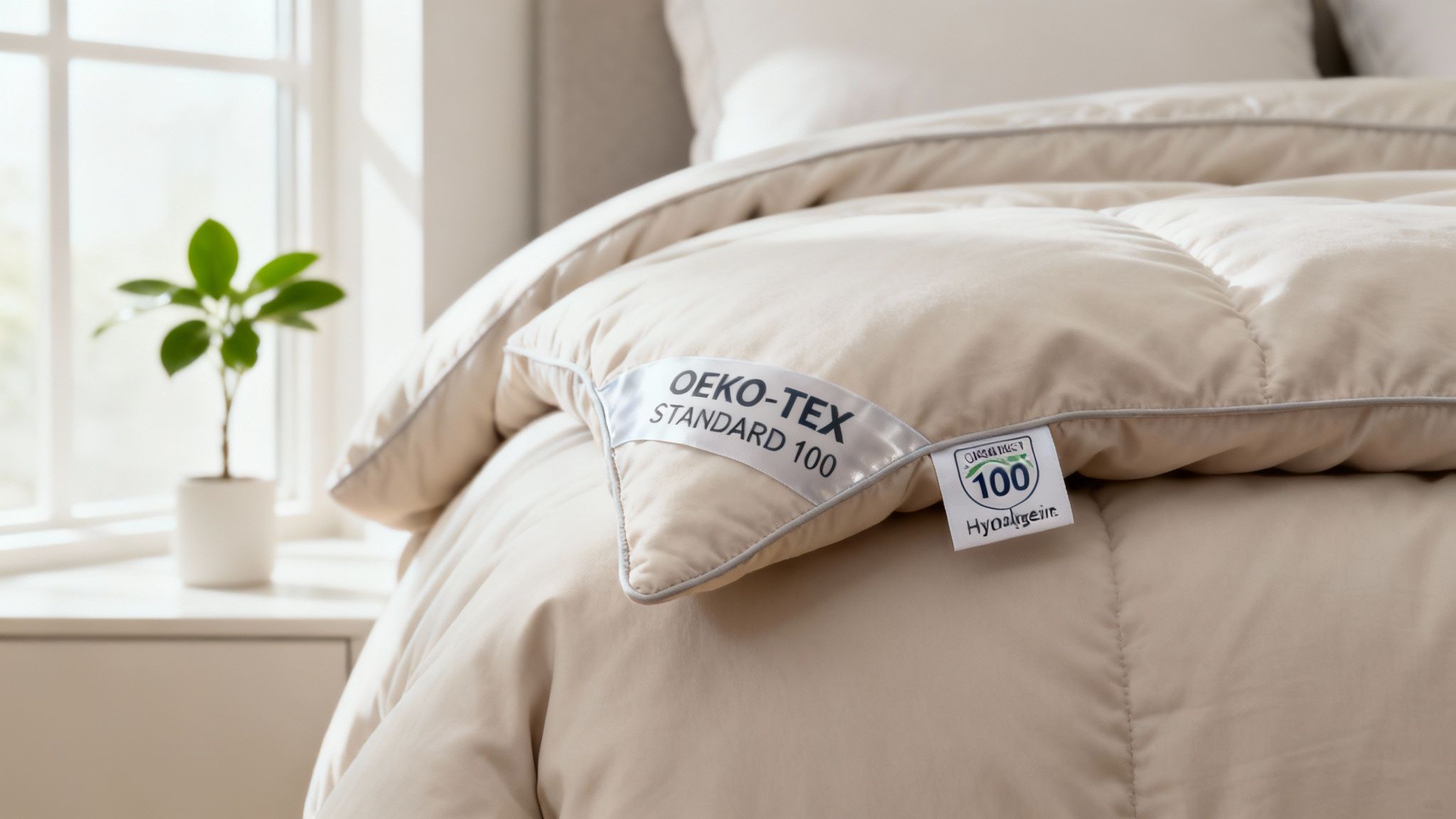
OEKO-TEX® STANDARD 100 – a guarantee of safety
If “hypoallergenic” is a promise, then the OEKO-TEX® STANDARD 100 certificate is its official confirmation. Think of it as a “safety passport” for bedding. This mark means that every component of the fabric has been thoroughly tested for harmful substances. And none were found.
This standard is global and completely independent, and its requirements are often much stricter than national laws. By choosing a product marked with OEKO-TEX®, you can be completely confident that your bedding is safe for you and your family.
Natural fabrics against allergies
Some fabrics are simply naturally better at fighting allergens.
-
Linen: Thanks to its unique structure, linen is incredibly breathable and dries quickly. This creates an environment where moisture-loving dust mites simply don’t want to thrive.
-
High-quality cotton: Very densely woven cotton, such as sateen, acts as a physical barrier, making it harder for allergens to penetrate deep into pillows or duvets.
-
Bamboo: This fiber also has natural antibacterial properties and absorbs moisture well, keeping the sleep environment fresh and dry.
When caring for sensitive skin, it’s important to pay attention not only to the fabric but also to the bedding fill. A hypoallergenic duvet with synthetic filling is a great choice, as unlike natural down, dust mites simply have nowhere to accumulate and multiply.
For maximum safety, combine a hypoallergenic fabric with the right filling. In our assortment, you’ll find not only bedding sets but also specially designed hypoallergenic duvets and hypoallergenic pillows that will guarantee peaceful sleep without any irritants.
Practical tips to keep your bedding delightful for years
Investing in quality Lithuanian bedding is like making a promise to yourself for a good night’s sleep. To keep that promise for as long as possible, and to preserve the color, softness, and shape of your fabrics, all it takes is a little attention and proper care. Every fabric has its own “character,” so you need to “talk” to it a bit differently.
This section is like a cheat sheet to help you avoid the most common mistakes and ensure your bedding looks as if it just came off the store shelf, even after many washes.
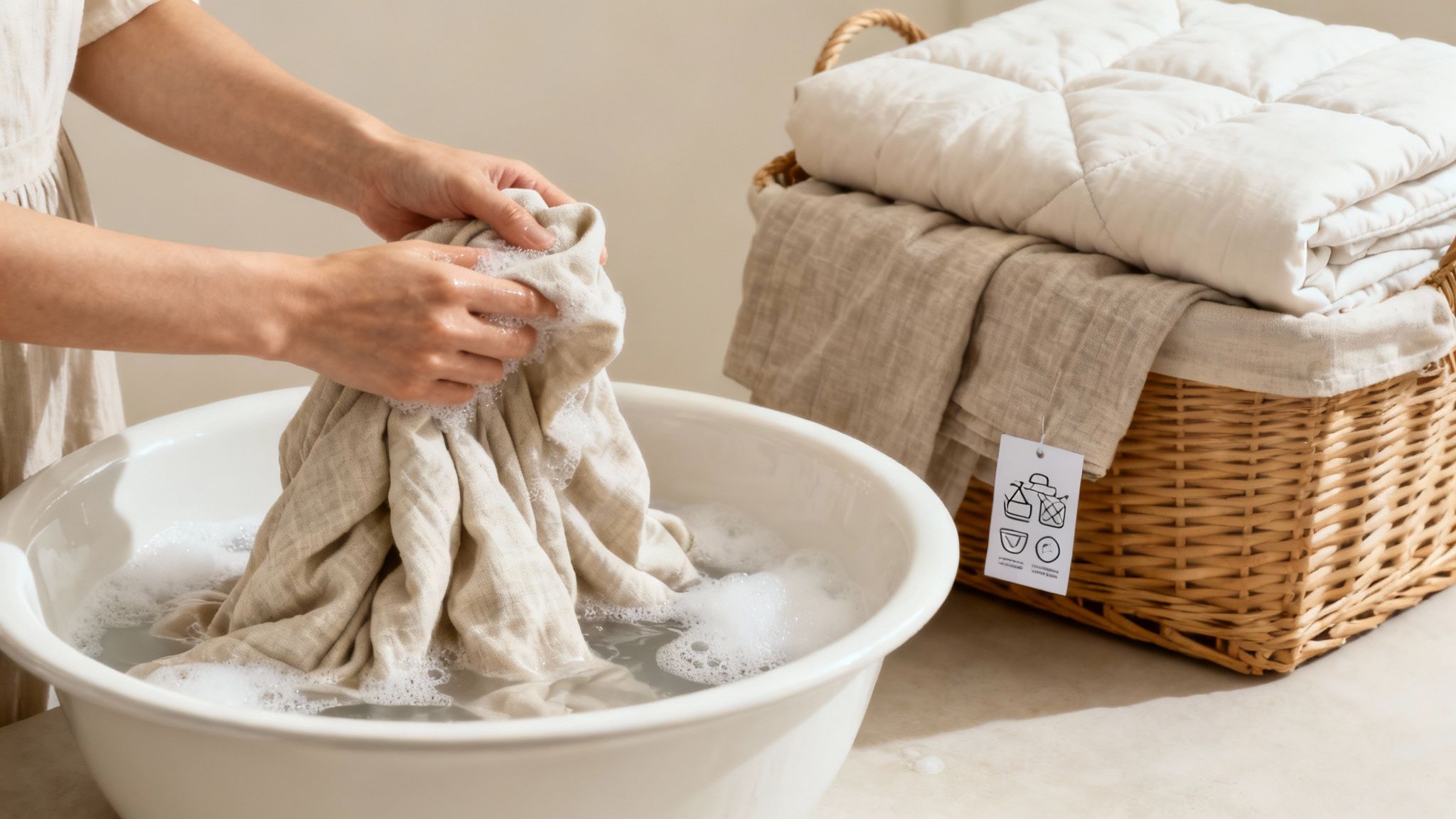
How to wash different fabrics correctly?
It all starts with the right washing temperature and products. Water that’s too hot can damage fibers, and the wrong detergents can mercilessly fade colors.
-
Cotton sateen. To preserve its subtle sheen, wash at no higher than 40 °C. A gentle detergent works best. Most importantly—avoid bleach, which can damage the delicate fabric structure.
-
Linen. This fabric likes cool water, so the optimal temperature is 30–40 °C. Try not to overload the washing machine so the linen can move freely—this way it will wrinkle less.
-
Cotton fabric. To preserve the color of cotton fabric, wash it inside out, also at 30–40 °C. And no fabric softener—it can reduce the fabric’s ability to absorb moisture!
Before first use, always wash new bedding. It’s not just a matter of hygiene—this removes manufacturing dust and makes the fabric softer and cozier.
Drying and ironing: myths and reality
Many believe that bedding must be ironed, but that’s not always true. For example, linen looks incredibly charming naturally wrinkled, and good sateen is often smooth enough after drying without an iron.
If possible, dry your bedding outdoors, but in the shade. Direct sunlight can “steal” brighter colors over time. Using a dryer? Choose a low-temperature program and don’t overload the drum—give the fabrics space.
The tradition of long-lasting bedding in Lithuania runs deep. Just think—in the early 20th century, when families wove their own bedding, linen fabrics were valued for their incredible durability. One set could last 15–20 years! You can read more about this and other topics on the ethnicart.lt website, which describes Lithuanian textile traditions.
Where and how to buy quality Lithuanian bedding
Shopping for bedding online can sometimes seem tricky—you can’t feel the fabric or inspect the seams. But a reliable manufacturer will always make sure you get all the information you need and feel as safe as if you were shopping in a physical store.
First, carefully review the product description. A good sign is when not only the fabric composition is specified, such as 100% cotton sateen, but also its density. Simply put, the higher this number, the stronger and more durable the fabric.
What else to look for when buying online
A successful purchase is not just about a quality product, but also a trustworthy seller. Honesty and clear terms are the key to trust.
-
Return policy. We fully understand that bedding needs to be “felt.” That’s why we offer a 30-night return guarantee. This gives you time to make sure your new purchase truly meets your expectations.
-
Quality guarantees. Look for proof that the manufacturer stands behind their products. Our 365-night warranty for seams and zippers speaks for itself—we are confident in the quality of our products.
Custom sewing isn’t a luxury—it’s a great solution for those with non-standard size duvets, pillows, or mattresses. Instead of compromising, you can get a product perfectly tailored to your bed.
This service lets you not only choose unique dimensions but also match fabrics and colors to your taste and home interior. These personal solutions turn a simple purchase into a pleasant creative experience. That way, your new Lithuanian bedding will delight you for years to come.
Frequently asked questions
Even when you think you’ve figured out the fabric and size, there are still a few small but important details. Here we’ve gathered short and simple answers to the questions our customers ask most often. We hope this helps you feel completely confident in your choice.
Is Lithuanian bedding suitable for children?
Absolutely—and it’s actually one of the best choices for your little one. Since reliable manufacturers’ Lithuanian bedding usually has the OEKO-TEX® STANDARD 100 certificate, you can rest assured—there are no harmful substances in the fabric.
Natural, breathable fabrics like cotton ensure that your child’s sensitive skin won’t be irritated and their sleep will be deep and restful.
How often should bedding be changed?
Hygiene specialists recommend changing bedding covers at least once a week, or at least every two weeks if that’s not possible. Why? Because while we sleep, our bodies naturally release sweat and shed dead skin cells. All of this becomes a perfect environment for dust and bacteria to accumulate.
By changing your bedding regularly, you simply maintain a clean and healthy sleep environment.
Is more expensive bedding really better?
Most of the time, yes. The price usually reflects the quality of the fabric, sewing craftsmanship, and most importantly, durability. Investing in a more expensive, denser set usually pays off, as it retains its color, shape, and pleasant softness for longer.
Cheap, low-quality fabrics wear out quickly, fade, and lose their appearance. In the end, you have to look for new ones again, so in the long run, it’s not really a saving.
Think of bedding as a long-term investment in your quality of rest. Good fabric will last for years and provide comfort every day.
What if my duvet is a non-standard size?
This is a common situation, especially if you have an older or imported duvet. The best and simplest solution is custom sewing.
Reliable manufacturers, such as “Rustilė”, offer the option to have bedding sewn to your provided measurements. This way, you can be sure everything will fit perfectly and look flawless.
Discover quality sleep with Rustile—browse our selection of hand-sewn bedding sets and find what will turn your bedroom into a true oasis of tranquility. Visit https://rustile.lt and feel the difference.
Leave a comment